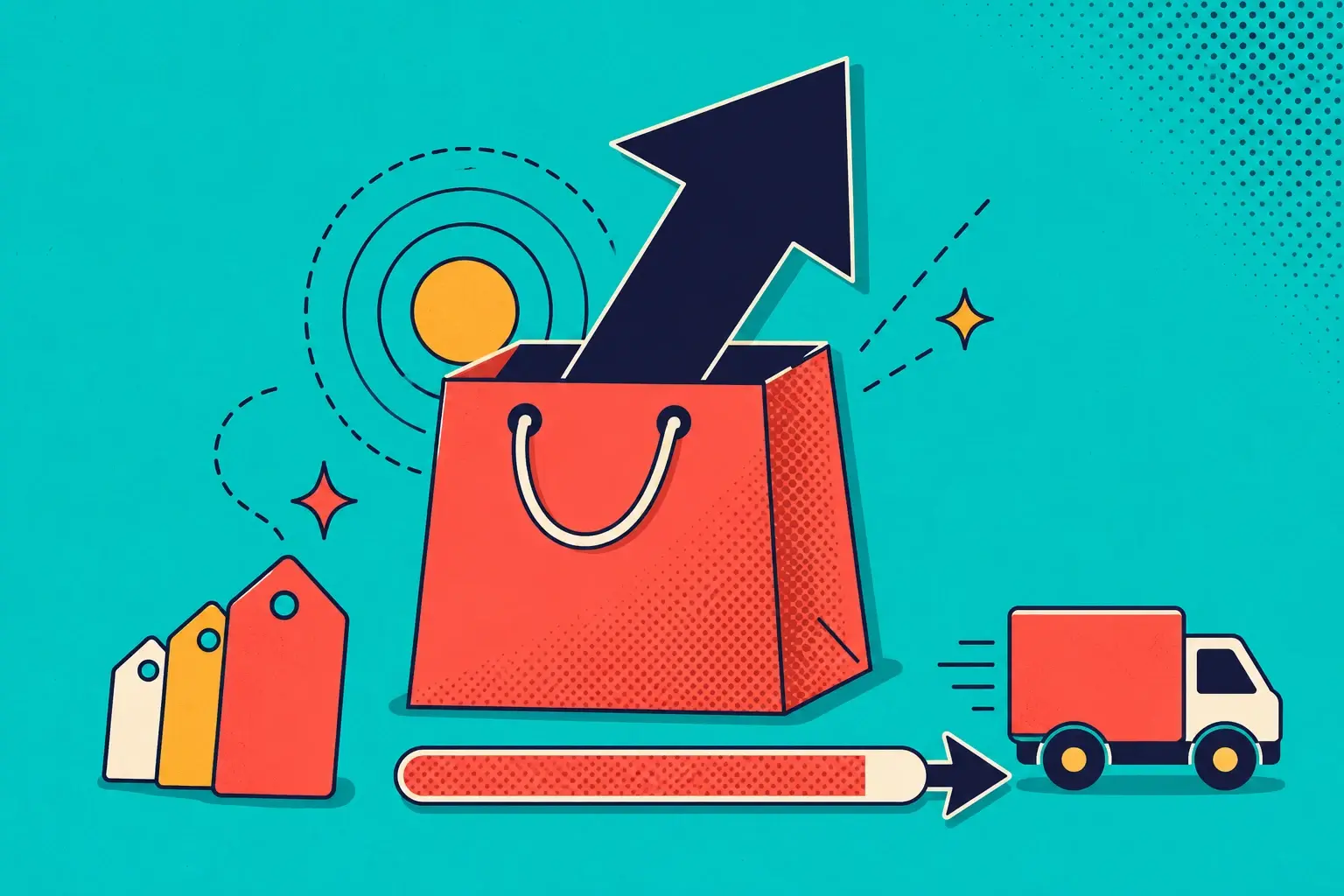
Average order value is the simplest number in your dashboard and the most ignored. It's revenue divided by orders — what a typical customer spends per checkout. Raise it, and every other part of your business gets easier.
Here's the part most stores miss. When AOV goes up, your margin per order goes up with it — fixed costs like payment processing and fulfillment overhead are spread across a bigger basket. That extra margin is what lets you outbid competitors on paid channels. The store with the higher AOV can afford a more expensive click and still come out ahead. AOV isn't a vanity metric. It's the ceiling on your acquisition budget.
And unlike chasing new traffic, lifting AOV works on shoppers who are already on your site, already in buying mode. Four tactics do most of the work.
Use free shipping strategically
"Free shipping" is the single most reliable phrase in ecommerce — and most stores either give it away with no strings or hide it until checkout. Both waste it.
Instead, turn it into a target. Set your free-shipping threshold roughly 25% above your current AOV. If shoppers typically spend $40, put free shipping at $50. That gap is small enough to feel achievable and large enough to nudge a meaningful share of carts upward. Someone holding a $42 cart will very often add a $9 item to clear the bar.
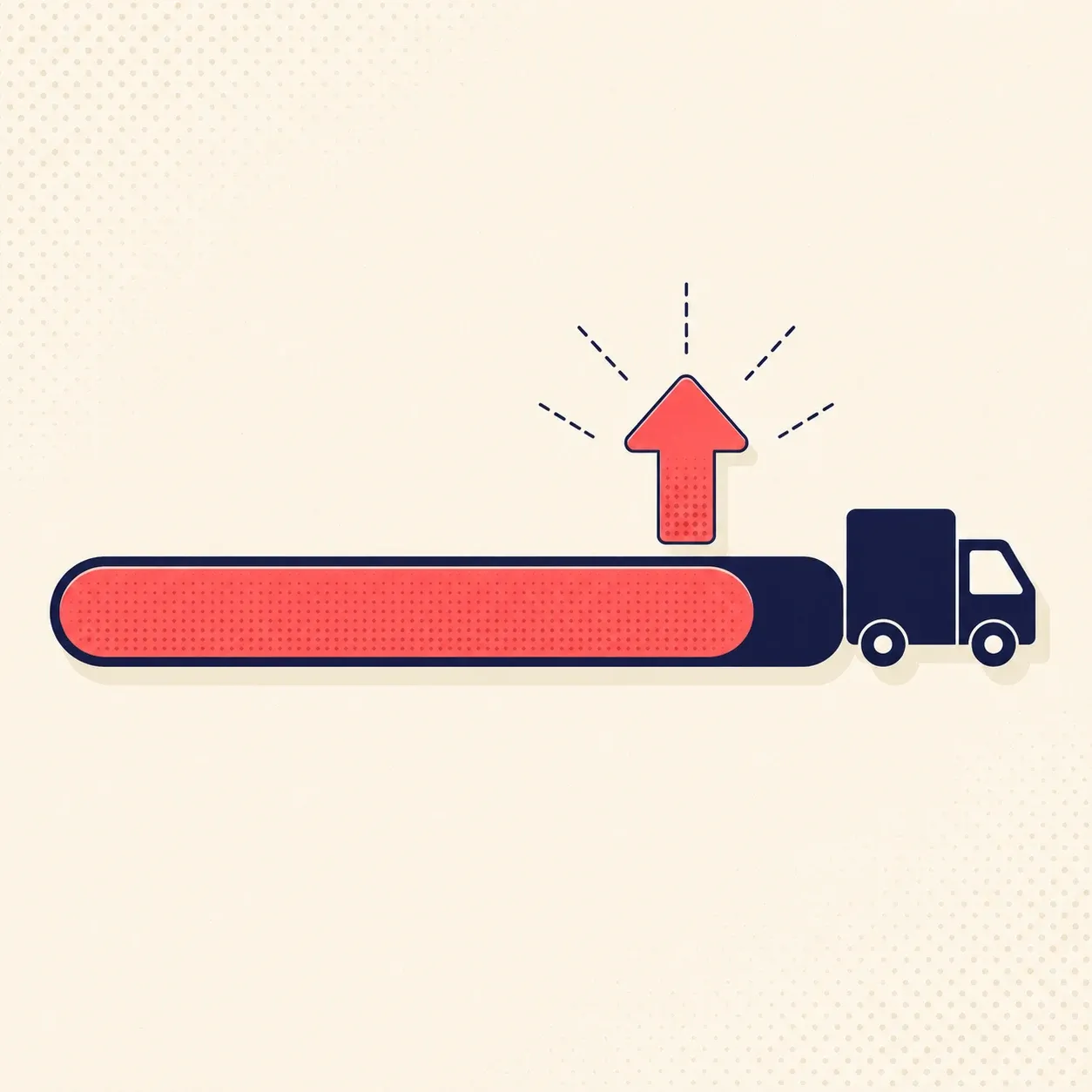
Then make the goal visible. A free-shipping progress bar — "You're $8 away from free shipping" — does two jobs at once. It lifts AOV by giving shoppers a reason to add one more item, and it reduces cart abandonment, because unexpected shipping cost at checkout is one of the top reasons people bail.
Don't guess the threshold. Test it.
The 25% rule is a starting point, not a law. Set it, watch AOV and conversion rate together for two weeks, then move it. If conversion drops hard, the bar is too high. If AOV barely moves, it's too low. The right number is store-specific.
Upsell and cross-sell in the buying moment
Fast food figured this out decades ago. "Do you want fries with that" is a cross-sell, and it's worth billions a year because it's asked at exactly the right second — after the customer has already committed to buying.
Two moves, often confused:
- Cross-sell — offer a complementary product. Phone case with the phone, batteries with the toy, care kit with the leather bag.
- Upsell — offer a better, pricier version of what they're already considering. The 256GB instead of the 128GB.
The mechanic that makes either one work is timing. A cross-sell on the homepage is noise. The same cross-sell on the product page or in the cart — when the shopper has already decided to spend money — is a service. You're not interrupting the decision; you're helping with it.
Don't trust your instinct on placement. Split-test it: product page vs. cart, before vs. after "add to cart," one suggestion vs. three. Small changes in where and when the offer appears move AOV more than the offer itself. For more on matching the offer to the shopper, see how to convert every type of shopper.
Build bundles people actually want
A bundle groups several products at a combined price lower than buying them separately. Done right, it lifts AOV and feels generous at the same time — the shopper spends more and believes they got a deal.
The mistake is bundling whatever you need to clear out. A bundle only works when the items genuinely belong together. The shopper has to look at the group and think "yes, I'd use all of that," not "I'm paying for two things I want and one I don't."
The highest-leverage version is the starter bundle aimed at first-time customers. A new shopper doesn't know which of your products to pick. A "starter kit" makes the decision for them, raises their first order, and — if the products are good — turns a one-item trial into a full-catalog introduction. You've lifted AOV and improved retention in a single SKU.
A good bundle makes the shopper spend more and feel like they got a deal. A bad bundle just feels like inventory you're trying to offload.
Promote the bundle before they reach checkout.
Use a woohoo popup or game to surface your starter bundle or free-shipping offer at the right moment — on the product page, on exit intent, on the second visit.
Add a higher-priced anchor
Most stores price for the middle and never offer anything expensive. That leaves money on the table — and not just from the few who'd buy the premium item.
Start with the 80/20 rule: a small fraction of your customers — your true fans — will happily pay for your best, most expensive product. If you don't sell one, those people simply spend less than they were willing to. Adding a genuine premium tier captures revenue you were already eligible for.
But the bigger effect is price anchoring. Put an expensive product next to a more moderate one, and the moderate one suddenly looks reasonable. A $200 option makes the $120 option feel like the sensible choice — when, shown alone, $120 felt steep. The premium product doesn't have to sell well. It just has to exist, so the rest of your range looks like a bargain by comparison.
This is why "Most Popular" labels on the middle tier work so reliably. The shopper sees three options, anchors on the top price, and lands on the one you wanted them to pick. The psychology behind this runs deep — we go further in consumer psychology for ecommerce.
Start with the traffic you have
New traffic is expensive and slow. The shoppers already on your site cost you nothing more — you've paid for them. Getting each of them to spend a little more is the fastest, cheapest path to profit there is.
Pick one tactic. Set a free-shipping threshold 25% above your AOV with a visible progress bar, or add one well-matched cross-sell to your cart. Measure for two weeks. Then layer in the next one. AOV compounds — every tactic stacks on the last.