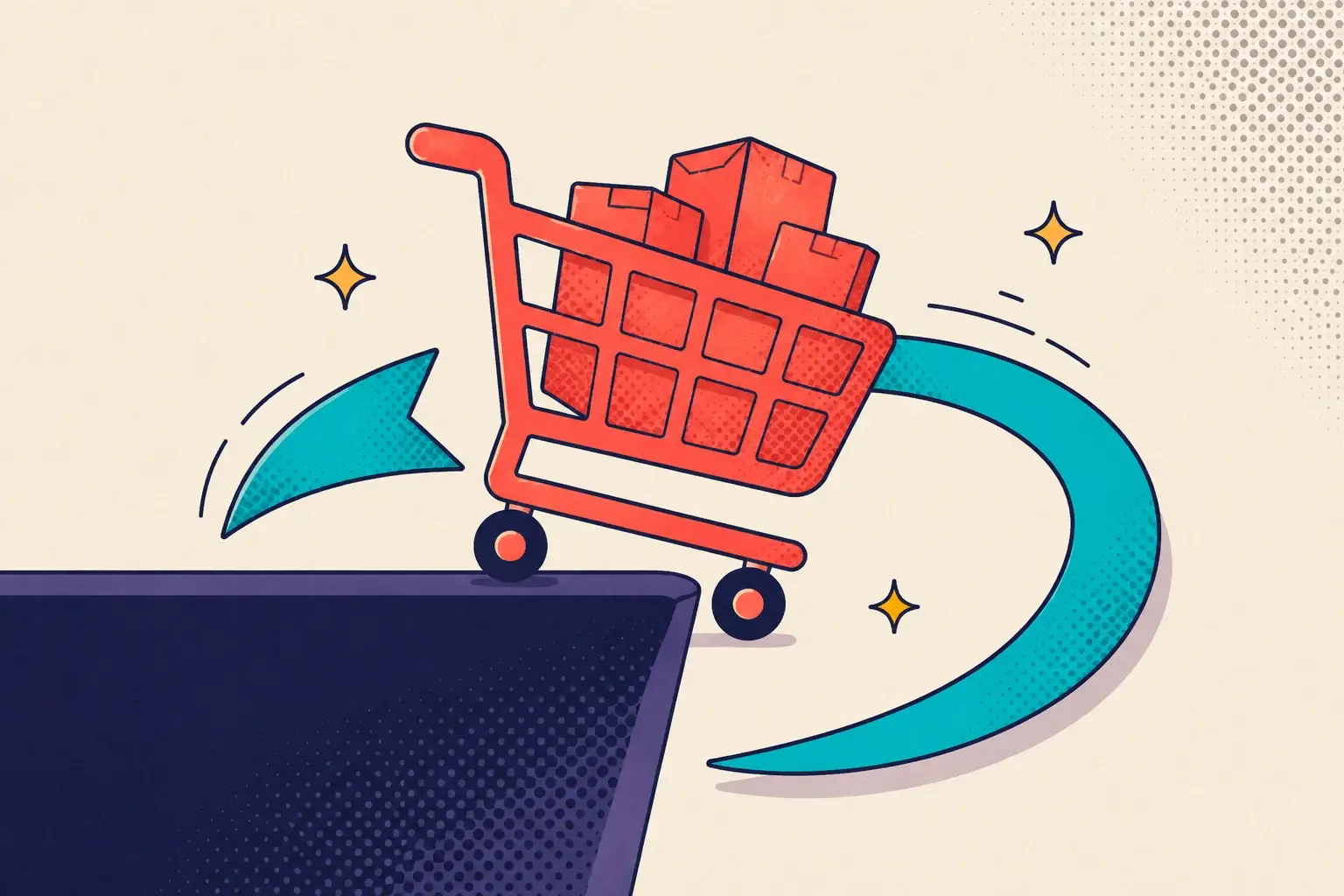
Around 70% of online carts never make it to a confirmed order. That isn't a leak you patch — it's the single largest pool of recoverable revenue on your store. You don't need to close all of it. Clawing back even a fraction of those carts moves your bottom line more than almost any acquisition spend.
Abandonment happens for ordinary reasons: a surprise shipping cost, a clunky checkout, a "let me think about it" that never comes back. The good news is that most of those reasons are addressable. Here's what works — at the exit, on the page, and after the visitor is gone.
Catch them at the exit
The moment a visitor's cursor heads for the close button is your last cheap chance to keep them. A flat "wait, here's 10% off" popup at that moment reads as desperation — and shoppers have been trained to ignore it.
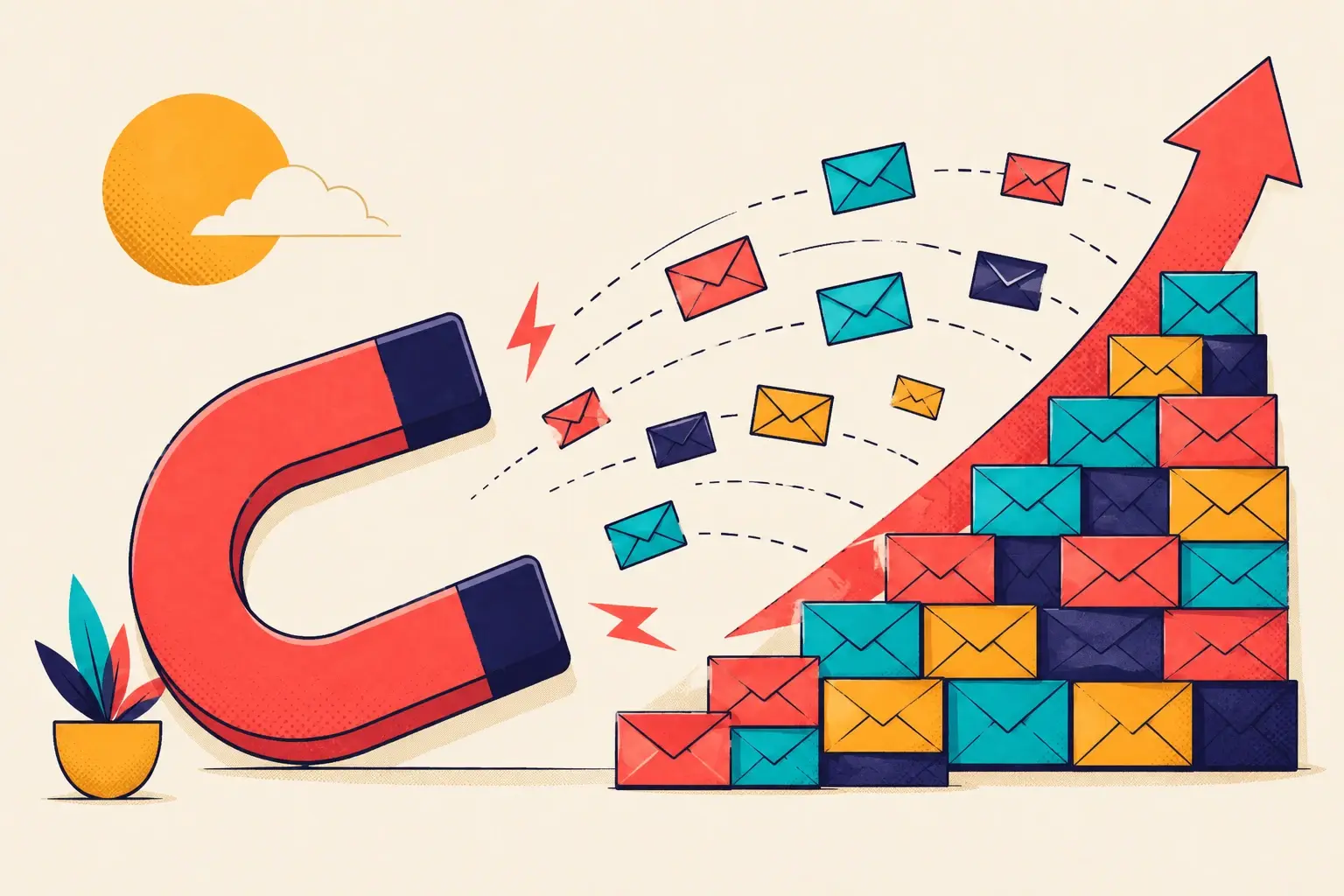
An exit-intent game doesn't. Trigger a spin-the-wheel or a scratch card as they move to leave, and the question changes from "do you want a discount" to "do you want to play." The interaction earns the coupon, captures the email, and gives the visitor a reason to come back and use it. Apparel brand Framebound built an exit-intent game into their store and grew their email list roughly tenfold — the full breakdown is in our Framebound case study. The mechanic works because it intercepts the abandonment instead of pleading against it.
An exit popup isn't dead — your offer is.
If your exit-intent popup converts at near zero, the problem usually isn't the timing. It's that you're showing a tired, flat offer. Swap the static discount for something interactive and the same trigger starts earning. More on this in your popup isn't dead, your strategy is.
Turn demand into on-site urgency
A cart often stalls not on price but on hesitation — "I'll come back later." Genuine urgency cuts through that. Show real demand signals while the shopper is still on the page: how many people are viewing an item, low-stock counts, recent purchases. When a shopper sees that the thing in their cart is moving, "later" quietly becomes "now."
The rule is that the urgency has to be true. Fake countdown timers and invented stock numbers get spotted, and once a shopper catches one, every claim on your site loses credibility. Surface real scarcity, not theatre.
Make checkout faster than the doubt
Every second and every form field between the cart and the confirmation is a window for second thoughts. A long, multi-step, desktop-first checkout abandons shoppers who had every intention of buying.
Strip it down. Offer guest checkout so no one has to create an account to spend money. Support social login for the shoppers who want it. Cut your form to the fields you truly need. And optimize the whole flow for mobile first — that's where most of your traffic is, and where a fiddly checkout does the most damage. The fastest path to fewer abandoned carts is often just a faster checkout.
Offer a hand before they bail
Some carts are abandoned out of uncertainty, not reluctance: a sizing question, a shipping doubt, a "does this work with the other thing I own." The shopper wanted to buy and couldn't get an answer fast enough.
Make help visible and easy at the moment of doubt — live chat, a clear FAQ link, an offer of assistance right on the cart page. A single answered question is often the entire difference between a recovered cart and a lost one. Treat support as a conversion tool, not a cost center.
Stop the exit, keep the cart.
Launch an exit-intent game that turns leaving shoppers into emails and orders — no code required.
Re-engage after they leave
Not every cart gets saved on the first visit. The shopper who left isn't gone — they're just not here right now. Three channels bring them back, and each works better when you stop treating it as a single nag.
Web push
Push notifications re-engage abandoners without needing an email address at all. The opt-in happens with one click, and a well-timed "you left something behind" lands directly on the device. It's a low-friction channel that most stores leave entirely on the table.
Retargeting ads, done as a sequence
Retargeting works — but following a shopper around the web with the exact same ad for two weeks doesn't; it just gets tuned out. Build a drip instead. Vary the creative across the sequence: a reminder, then a benefit, then social proof. The shopper sees a story unfold rather than the same banner stalking them.
Email, beyond the single reminder
Most stores send one cart-recovery email and stop. A short drip converts far better. Email one is a plain reminder — "your cart is waiting." Email two adds an incentive, like a small discount or free shipping. Email three brings social proof — reviews and ratings for the items still sitting in the cart. Three touches, three different reasons to come back. For more on building the list these emails depend on, see how to build your email list.
A flash sale or time-boxed offer
Sometimes the abandoner just needs a deadline. A genuine, time-sensitive offer on the category they were browsing gives a stalled cart a reason to convert today instead of "someday." Use it sparingly so it stays a signal, not background noise.
Seventy percent of carts walk out the door. You don't need to recover all of them — you need to stop pleading and start intercepting.
Measure, then tune for your store
None of these tactics is universal. The exit game that transforms one store's recovery rate might underperform a faster checkout on another. The only way to know is to run each campaign with a clear metric attached and watch what your store actually does.
Pick two tactics from this list, ship them, and measure recovered revenue per campaign — not vanity clicks. Keep what earns, cut what doesn't, and tune the rest. Cart abandonment isn't a problem you solve once; it's a number you keep pulling down. For the metrics worth watching while you do, see popup metrics that actually matter.