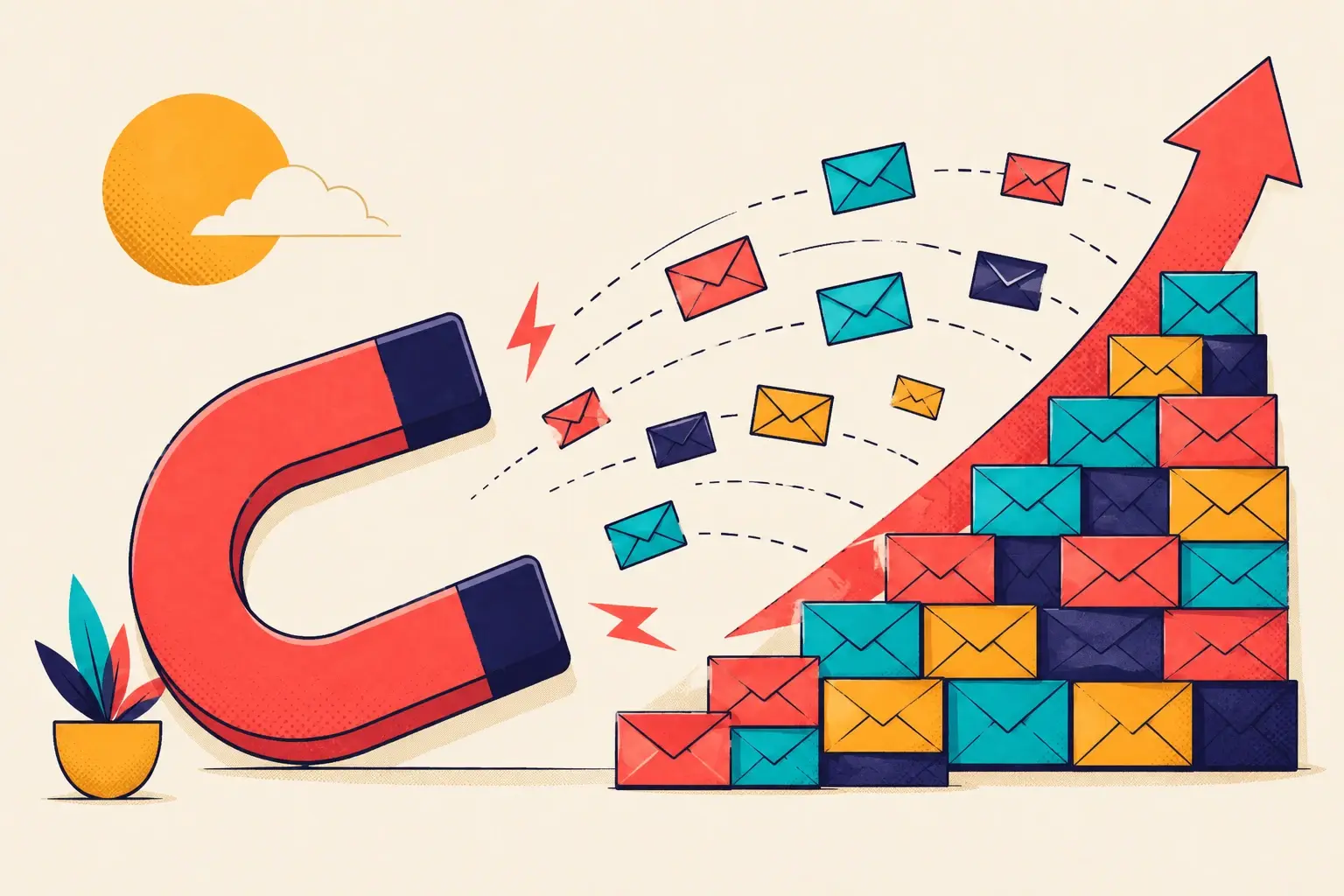
Framebound sells entrepreneur-inspired art and canvas prints — bold, motivational pieces that found a strong audience with millennial buyers building offices, gyms, and first apartments. Traffic was never the problem. Keeping it was.
This is a documented case study from a 2019 campaign. The numbers below are the real figures Framebound recorded over a four-month window — kept here as history, not as a promise of what any store will hit. The mechanics, though, transfer cleanly.
The problem
Framebound pulled visitors from a lot of directions at once — social, paid, referral, search. People landed, browsed the catalog, admired the prints, and left. No purchase, no email, no way to follow up. The brand was paying to fill the top of the funnel and then watching most of it drain out the bottom.
They already ran a popup. It was the conventional kind — a box asking for an email in exchange for a first-order discount. It captured a trickle, but nowhere near enough to justify the traffic flowing past it. The store had attention. It just had no mechanism to convert that attention into something it owned.
Framebound was paying to fill the top of the funnel and watching most of it drain out the bottom.
What they changed
Framebound replaced the static popup with a woohoo gamified one: a scratch-card-style coupon game, where a shopper reveals a hidden discount instead of being handed a flat number. Same surface, same goal — capture an email — but a completely different ask. The visitor plays first; the email comes after, to claim what they uncovered.
The targeting mattered as much as the mechanic. Rather than firing at every visitor on arrival, the game was aimed at shoppers actively browsing the store — people who'd already moved past the homepage and shown real interest, and who already recognized the brand. The popup met them at the moment of intent, not the moment of arrival. (For where else that logic applies, see 5 places to use popups on your store.)
The results
Over the four-month campaign window, the gamified popup recorded:
Across 494,410 impressions, the game converted 9.7% of them into an email address — roughly 50,000 new contacts over the four months. The emails captured on-site went on to drive about 16.46% in additional revenue. And compared to the conventional popup it replaced, the brand grew its email list around ten times faster.
The traffic didn't change. The product didn't change. The acquisition spend didn't change. The only variable was what greeted a browsing shopper — a flat form, or a game.
The list is the asset.
A 10× faster list isn't a vanity metric. Email is a channel you own outright — no ad auction, no algorithm tax. Every contact captured on-site is a future campaign you can run for free. That's why the extra revenue compounds long after the four-month window closes.
Why gamification worked
The lift wasn't novelty. It came from four psychological levers the static popup never touched:
- A sense of achievement. A coupon you reveal feels won. A coupon handed to you in a form feels like an ad. The same discount carries more weight when the shopper did something to uncover it.
- Competition with yourself. A hidden reward holds a question — how good will mine be? The chance at a bigger discount pulls the shopper into the action in a way a fixed "10% off" never can.
- The feeling of being rewarded. Revealing a prize lands like a loyalty-points payoff — a small hit of being recognized and given something, which makes the moment memorable instead of transactional.
- A sense of exclusivity. Winning grants access to something other shoppers didn't get. That exclusivity makes the discount feel personal, and a personal reward is far harder to close and forget.
None of these are tricks. They're the same forces that make any reward feel meaningful — Framebound just put them in front of a shopper at the right moment. For the broader pattern, our anatomy of a 13.2% popup shows how the same levers scale across thousands of stores, and consumer psychology for ecommerce goes deeper on the why.
Run the same play on your store.
Swap your static popup for a gamified one and start capturing the traffic you're already paying for.
Run the same play
Framebound's story is simple to summarize: their traffic was fine, their funnel leaked, and a conventional popup wasn't enough to plug it. They engaged their active shoppers with something out of the box — a game instead of a form — and that single change is what grew the list and the revenue behind it.
The campaign ran in 2019, but the logic hasn't aged. If shoppers are landing on your store and leaving without a trace, you don't have a traffic problem — you have a capture problem. Give a browsing shopper a reason to engage instead of a box to close, and see what your own four-month window looks like.